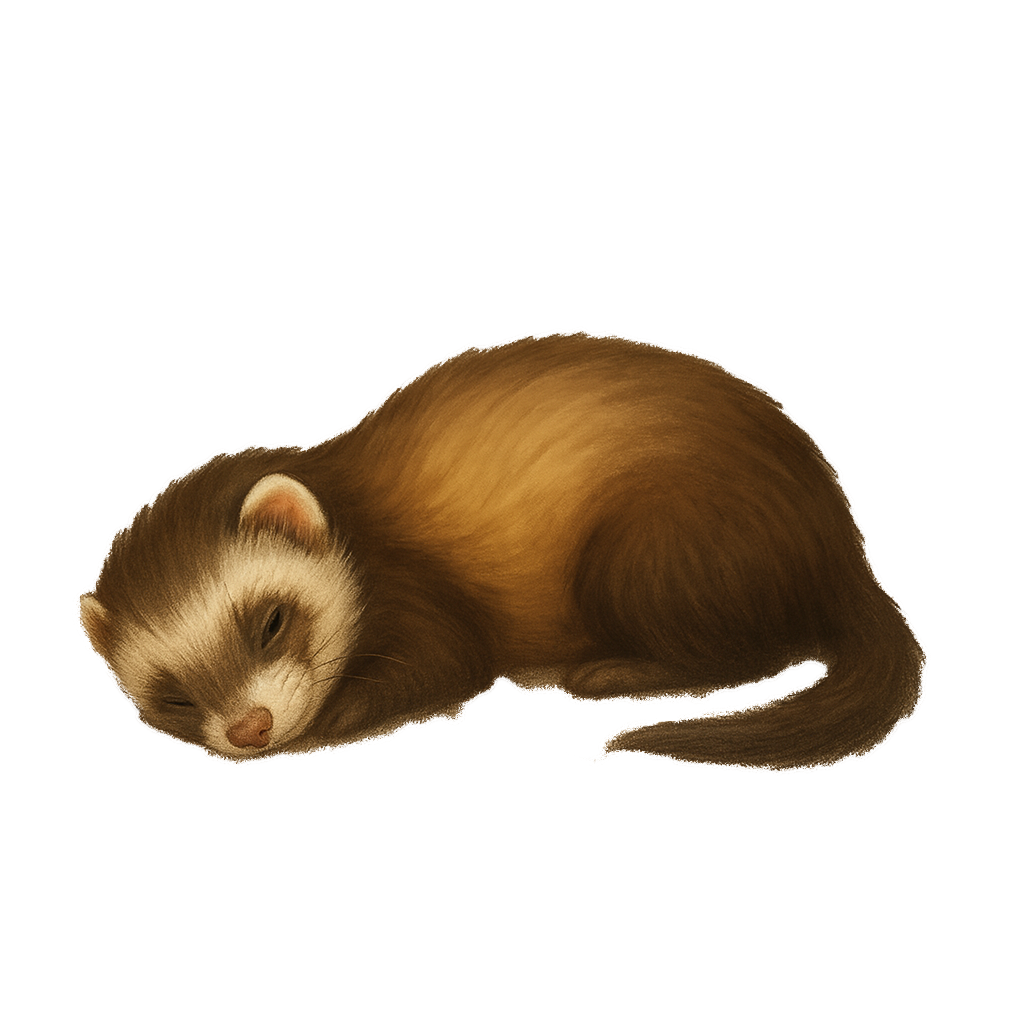
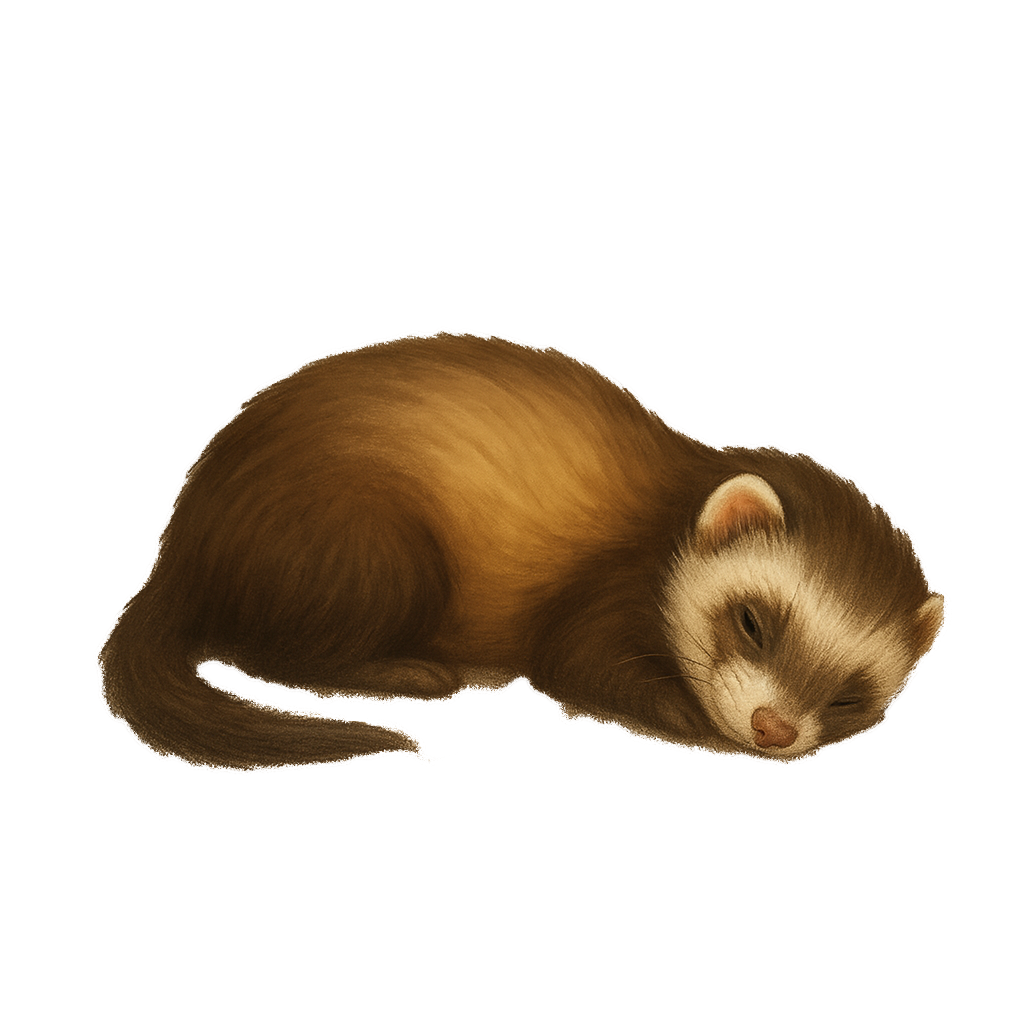



What Is a Ferret?
🧠 Ferret Fax 🧠Ferrets are not cats, not dogs, and definitely not rodents — though they sometimes borrow tricks from all three. Scientifically speaking, the domestic ferret (Mustela putorius furo) belongs to the mustelid family — the same clever lineage as weasels, otters, badgers, and mink. They’re small, flexible, and wired for curiosity — built like living springs with faces you can’t stay mad at.
🧬 Scientific Identity
| Scientific Name | Mustela putorius furo |
|---|---|
| Family | Mustelidae (weasel family) |
| Origin Species | European polecat (Mustela putorius) |
| Native Range | Originally Europe & Western Asia |
| Average Lifespan | ~7–10 years in captivity |
| Size | Females ≈ 0.3–1.1 kg; Males ≈ 0.9–2.7 kg |
| Body Length | ~33–40 cm (+ tail ~8–10 cm) |
The word furo links back to Latin roots for “little thief” — fitting for experts at stashing socks, keys, and whatever else will fit under a couch.
🕰️ A Brief History
For over 2,500 years, humans have worked with ferrets for vermin control and rabbit hunting (a practice called “ferreting”). Traders and sailors spread them across Europe because a ferret on board meant fewer rats in the hold. Over time, they moved from barns to living rooms, becoming popular companion animals in many countries.
🧍♂️ Personality & Behavior
Ferrets are typically crepuscular (most active at dawn and dusk) and highly social, bonding closely with people and other ferrets once they feel safe. Common traits include:
- Curious — they investigate every sound, hole, and shiny object.
- Playful — famous for the joyous “weasel war dance” when excited.
- Sneaky — natural hoarders with a dedicated stash spot.
- Affectionate — love hammocks, pile naps, and hanging with their crew.
🌈 Colors & Varieties
Domestic ferrets come in sable, albino, cinnamon, chocolate, black, champagne, and more. All share the signature long, noodle-like build. Males are typically larger; females tend to be smaller and quicker.
⚡ Quick Ferret Facts
- Ferrets sleep 14–18 hours a day.
- They communicate with a clucking sound called “dooking.”
- Wide field of vision and great motion detection for a small predator.
- Every ferret picks a unique “treasure stash” location at home.